10 Hidden Coves in Cornwall You Can Only Reach at Low Tide
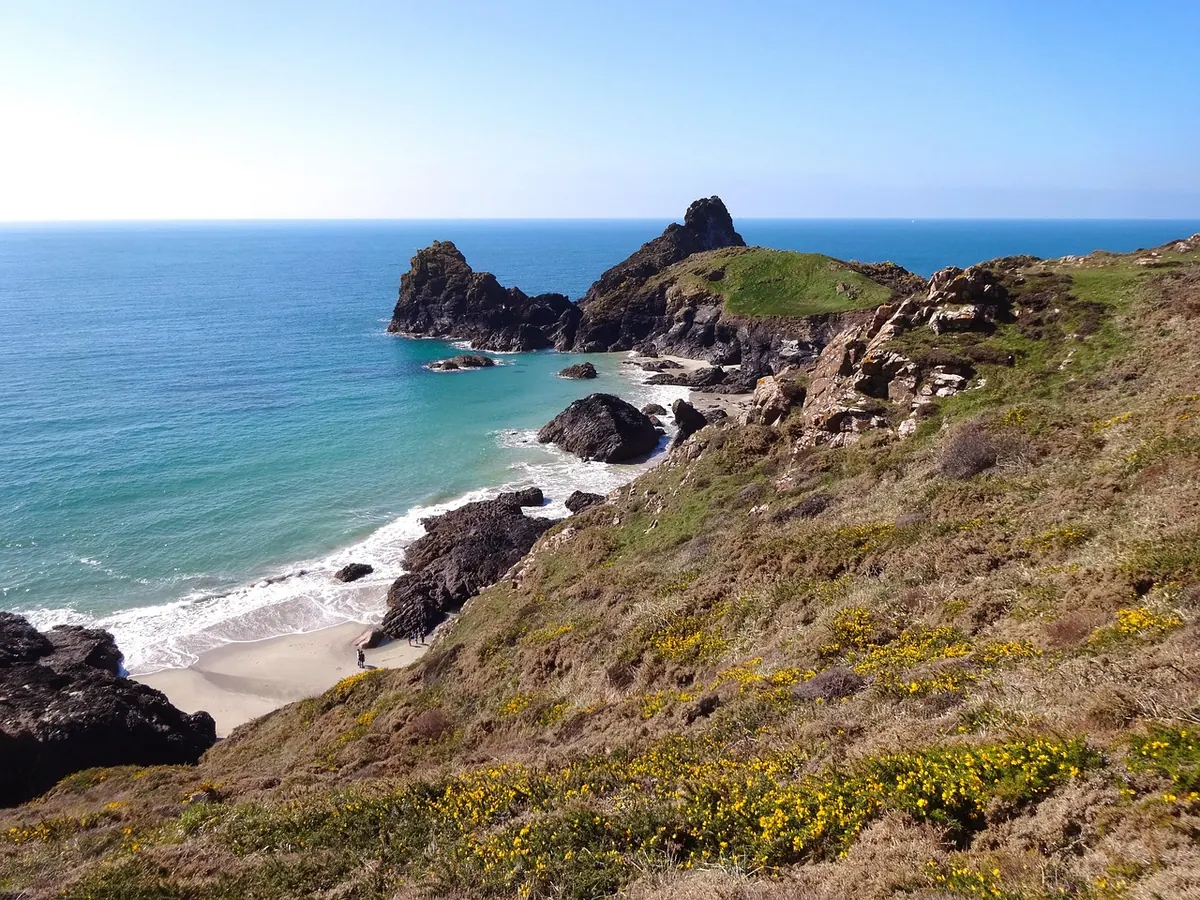
Cornwall's finest sand is rarely the sand with a car park next to it. Some of the county's most beautiful coves stay hidden for most of the day, buried under Atlantic water, and only show themselves for a few hours either side of low tide. Miss your window and you are looking at a wall of surf. Get it right and you might have the whole place to yourself.
These are coves that are reached on foot, reached at low water, and reached with a bit of planning. Ten of them, spread from the Land's End peninsula to the north coast and the quieter stretches of the south. None have lifeguards. Most have no facilities at all. That is rather the point.
Read the tide before you read the map
Tide tables for Cornwall are free from the harbour offices, the coastguard stations and any number of apps, and they are not optional reading. A few things matter more than the rest.
- Low water is the middle of your window, not the start of it. A cove might be walkable for four hours, or for forty minutes, depending on the beach and the state of the tide.
- Go on a falling tide, come back on a rising one. Arriving as the water is still dropping gives you room to explore and a clear margin for error.
- Spring tides give you more sand and less time. Neap tides leave less beach but the window opens and closes more gently.
- Note the escape route. If the only way off a beach is a path you have to find again in the dark or the spray, think twice about a late afternoon visit.
The Logan Rock coast: Pedn Vounder and Porthchapel
Pedn Vounder, below the granite terraces between Porthcurno and Treen, is the classic example of a beach that does not exist for half the day. Walk down from Treen on the coast path, pick your way through the gully, and at low water you find fine white sand, improbable turquoise water and a sandbar that links across to Porthcurno. At high water there is nothing here but boulders and deep water. Informal naturist use is common on the quieter sections; nobody takes much notice.
A short walk west, Porthchapel is smaller, softer and often completely empty. The path down from the St Levan road is steep and slippery after rain, and the beach is little more than a pocket of sand between dark rocks. Check the swell before committing: the shore break here is short and sharp, and there is no easy exit once the tide turns.
Nanjizal and the Land's End coast
Nanjizal, also called Mill Bay, sits in a deep fold of coast between Land's End and Porthgwarra. It is a twenty-minute walk from the Trevescan area, or a bracing stretch of the coast path from Land's End itself. The reward is the Song of the Sea, a tall rock arch that catches the light and frames the water behind it, plus a stream that cuts across the sand. The beach is genuinely tidal: arrive at the wrong hour and you are standing on wet rock looking down at surf. There are no facilities, no parking at the cove and mobile signal is patchy.
Further north, Pendour Cove at Zennor is the setting for the village's mermaid legend. The path down is rough and not always obvious, and the cove itself only offers comfortable ground at low water. Treat it as a quiet hour of scrambling and rock pools rather than a beach day.
North coast: Portheras, Tregardock and Bossiney
The north coast is where the swell is biggest and the coves are least forgiving. Portheras Cove, a shingle and sand bay between Pendeen and Morvah, is reached by a footpath from the coast road and shows a good stretch of sand at low tide. Tregardock, north of Delabole, requires a steep descent on steps cut into the cliff; at low water you get sand, boulders and excellent rock pools, and at high water you get a very small corner of pebbles.
Bossiney Haven, near Tintagel, is one of the prettiest of the lot: a narrow inlet with a waterfall trickling down the cliff and a beach that appears only as the tide drops. The entrance is tight enough that the path down can be hard to spot from the road, and the beach vanishes quickly on the flood. Give yourself more time here than you think you need.
South coast: Lantic Bay, Vault Beach and Prussia Cove
Lantic Bay, National Trust land between Polruan and Polperro, is a steep walk down from the clifftop car park but rewards you with pale sand and shelter from anything but a southerly. Little Lantic, just to the west, is quieter still. Both are best at low water, and both have paths that are muddy and slow in winter.
Vault Beach, tucked under Dodman Point and reached on foot from Gorran Haven, is a long crescent of coarse sand with no facilities whatsoever. It takes a good twenty minutes of walking to get there, and the beach is at its widest on a spring low. Prussia Cove, on the south coast near Rosudgeon, is a cluster of small inlets — Bessie's Cove, King's Cove — with slipways and rocks that only reveal themselves properly as the water draws back. Parking is limited and the lanes are narrow; go early or go out of season.
Around the Camel: Epphaven and Lundy Hole
Epphaven, a small cove just along from Polzeath, is the sort of place people walk past for years without noticing. At low water you can pick your way along the rocks to Lundy Hole, a cave-like inlet that disappears completely on the flood. It is a short, easy walk from the Polzeath side, which makes it a good first attempt if you are new to tidal coves — but the tide still moves faster than you expect.
Hawker's Cove, on the Padstow side of the Camel estuary, is another that only opens up properly at low water. The old lifeboat station sits above it, and the beach below is a mix of sand and mud. Do not confuse the calm look of an estuary with the speed of an Atlantic beach; the water here can still fill quickly.
What to carry
- A printed tide table as well as a phone app — batteries die and signal drops.
- Footwear with grip. Wet granite and seaweed are genuinely treacherous.
- A light waterproof, even in August. Coastal showers arrive without warning.
- Water, a snack and a means of calling for help.
- A bag for your rubbish. There are no bins at any of these coves.
Practical notes before you set off
Tell someone where you are going and when you expect to be back. The coast path has patches with no phone signal, and a slipped ankle on a wet descent is the most common way a good day goes wrong.
Do not walk beneath overhangs or freshly fallen rock, and keep clear of cliffs after heavy rain — Cornwall's cliffs do shed material, and these coves sit directly beneath them. If you find yourself cut off, climb to high ground if you safely can and dial 999 and ask for the Coastguard. Do not swim for it.
Park considerately in the villages; most of these coves sit at the end of narrow lanes where a badly parked car blocks a farmer, a resident or an emergency vehicle. Keep dogs under control around nesting birds and livestock, and leave the place as you found it.
Finally, accept that you will not see all ten in one trip — and that some days the sea simply will not let you in. Those are the days to walk the clifftop, look down at the empty water and plan the next low tide.
Photo: joakant / Pixabay