Dog-Friendly UK Beaches: A Seasonal Checklist for Summer Visits
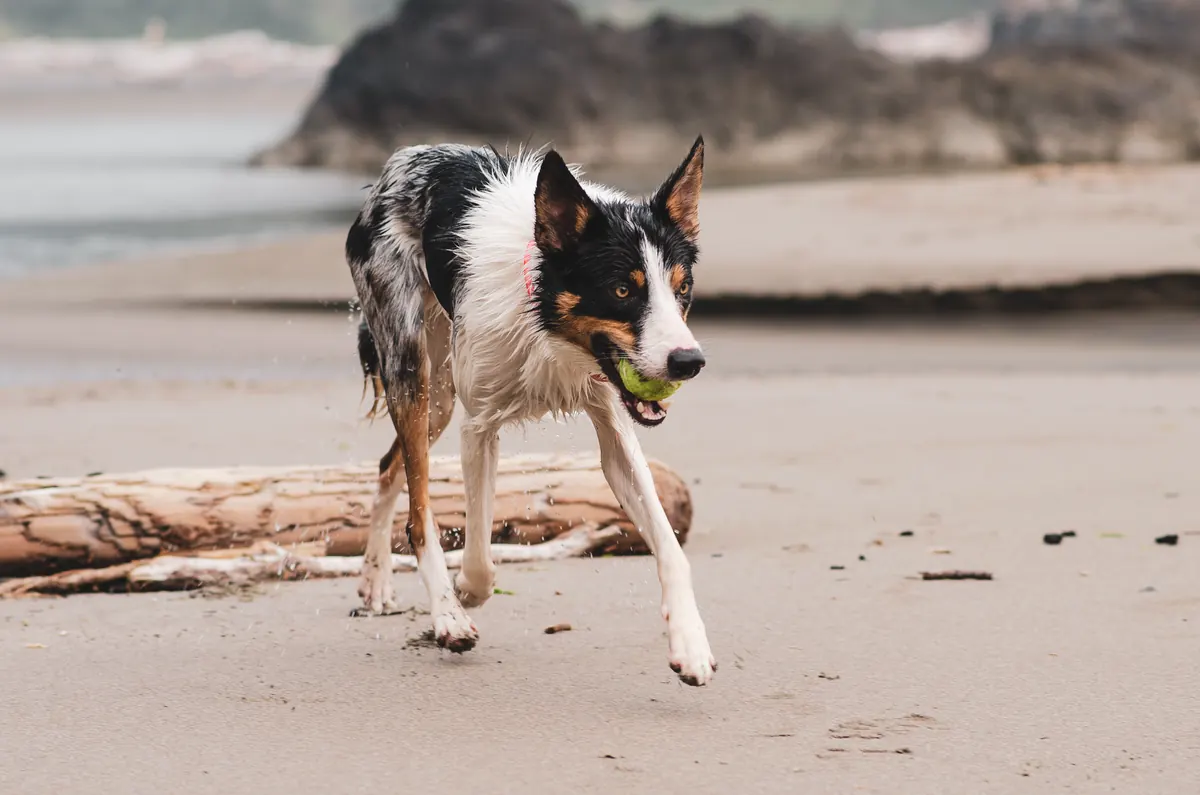
The best beach days with a dog are rarely the busiest ones. They are the mornings when you leave an hour earlier than you wanted to, park before the queue forms, and walk past the crowded stretch to a piece of sand where the lead can come off and nobody minds.
Summer adds complications that January never does: rules, crowds and heat all arrive at once. None of it is difficult to plan around, but it needs checking in advance rather than at the barrier at the top of the slipway. Run through this lot before you load the car.
Check the summer dog restrictions first
Many popular beaches ban dogs during the summer, and the rules are set locally rather than nationally. Dates vary. Some councils restrict from Easter to the end of September, others from 1 May to 30 September, and a few apply the ban only during certain hours of the day. What matters just as much is the area covered: a restriction often applies to the main central beach, the promenade or the stretch beside the car park, while a neighbouring bay ten minutes' walk away stays open to dogs all year.
Two places to look: the council's website, where you may find pages on dog control or public spaces protection orders, and the signs at the beach access points themselves. Breaching a restriction can lead to a fine, and enforcement does happen in peak weeks.
A quick way to plan around a partial ban
Look at the coast path rather than the road. If the banned beach is the one with the ice cream hut and the lifeguards, the open one is usually the next bay along, reached by a short cliff walk. Ask in a local shop or a dog-friendly café, too; staff usually know which stretches the wardens patrol and which ones quietly escape attention.
Read the tide table, not just the forecast
Tides catch more people out than weather does. On a wide, flat beach the water can advance faster than walking pace, and a channel may fill behind you before the route back to the slipway does. The same beach that looks enormous at midday can be gone by teatime.
- Find the time of high water for that day, then work backwards from it.
- Give yourself a margin. Be off the low-lying sand an hour or two before high water, not as it arrives.
- Choose a landmark you trust, such as a slipway, groyne or headland. Not a sandbank, which moves.
- Keep dogs out of fast-moving water and estuary channels. If yours is caught in a current, do not follow it in; call them out and get help.
- Treat mudflats with real caution. Soft mud and hidden channels are not a place for a dog to run loose.
One more thing worth knowing: dogs should not drink sea water. Small accidental mouthfuls are usually harmless, but swallowing a lot can make a dog ill. If yours has taken in a serious amount, ring your vet for advice rather than waiting to see.
Facilities worth checking from home
Car parks. Height barriers, cash-only machines and no phone signal are all common in rural coastal car parks, and a sunny Saturday can fill the main one by mid-morning. Have a second option in mind.
Bins. Not every beach has one, and seasonal bins are sometimes removed. Assume you are carrying the bag home.
Water. Taps at beachside facilities are often turned off out of season or removed altogether. Bring your own and don't count on a refill.
Shade. Sand and shingle offer none, and a pub garden umbrella is not a plan. A windbreak or pop-up shelter gives a dog somewhere to lie out of the sun.
Food and drink. Plenty of coastal pubs and cafés welcome dogs, but check opening days and whether dogs are allowed inside as well as in the garden.
The nearest vet. Jot down the practice closest to your destination before you need it, and note that out-of-hours cover may be at a different site.
What to put in the bag
- Lead, plus a long line for beaches where a lead is required but you want a little more freedom.
- More water than you think you need, and a bowl that folds flat.
- Poo bags, and a spare bag for the full one until you find a bin.
- Two towels: one for the dog, one for the car seats.
- A mat or old blanket, so your dog can settle without lying on hot sand or sharp shingle.
- A basic first-aid kit, and your vet's number saved in your phone.
- Tick tweezers. Dunes, marram grass and rough pasture are where they live.
- A collar tag with a phone number someone will actually answer, and microchip details kept up to date.
If your dog is pale-nosed, white-coated or thin-skinned, sunburn is a genuine risk. Ask your vet what sun protection is suitable; human sunscreen is not automatically the right choice for a dog.
Etiquette on a busy beach
Summer etiquette is mostly about other people's dogs, children and picnics. A few habits keep everyone relaxed.
- Keep to lead rules even when the beach looks empty. They are there for wildlife and for people, not just for your dog's recall.
- Be honest about recall. If your dog does not come back first time, every time, use the long line.
- Ask before letting your dog approach another. Some are old, some are nervous, some are on a lead because of an injury.
- Steer clear of picnics, sandcastles and anyone fishing. Anglers have lines, hooks and bait at ground level.
- Give wildlife a wide berth. Nesting birds on shingle and dunes are easily disturbed, and a resting seal should never be approached. A useful rule of thumb: if the animal has noticed you, you are too close.
- Pick up, bag it, and take it to a bin, even if that means carrying it to the car.
Heat, paws and the middle of the day
Sand, shingle, promenade paving and tarmac all heat up far more than the air temperature suggests. Press the back of your hand to the ground for five seconds; if you cannot hold it there, your dog should not be walking on it. Aim for early mornings and evenings, and plan the middle of the day around shade, water and rest rather than a long walk.
Watch for heavy panting that does not settle, excessive drooling, wobbling or glazed eyes. If you suspect heatstroke, move the dog into shade, wet the coat and paws with cool water, offer a drink, and contact a vet straight away. If you are unsure, treat it as urgent; veterinary advice is always the safer route.
A five-minute check before you set off
- Council rules checked for the exact bay, including dates, hours and which stretch is covered.
- Tide times checked, with high water noted and a turning-back point agreed.
- Nearest vet and out-of-hours arrangements saved in your phone.
- Water filled, bags packed, towels and shade in the boot.
- A second beach in mind in case the car park is full or the first choice is heaving.
Then leave early, walk past the crowded stretch, and let your dog have the sort of morning that ends with a rinse-off, a long drink and a very quiet journey home.
Photo: Brixiv / Pexels