Five UK Sea Stories Behind Famous Lighthouses
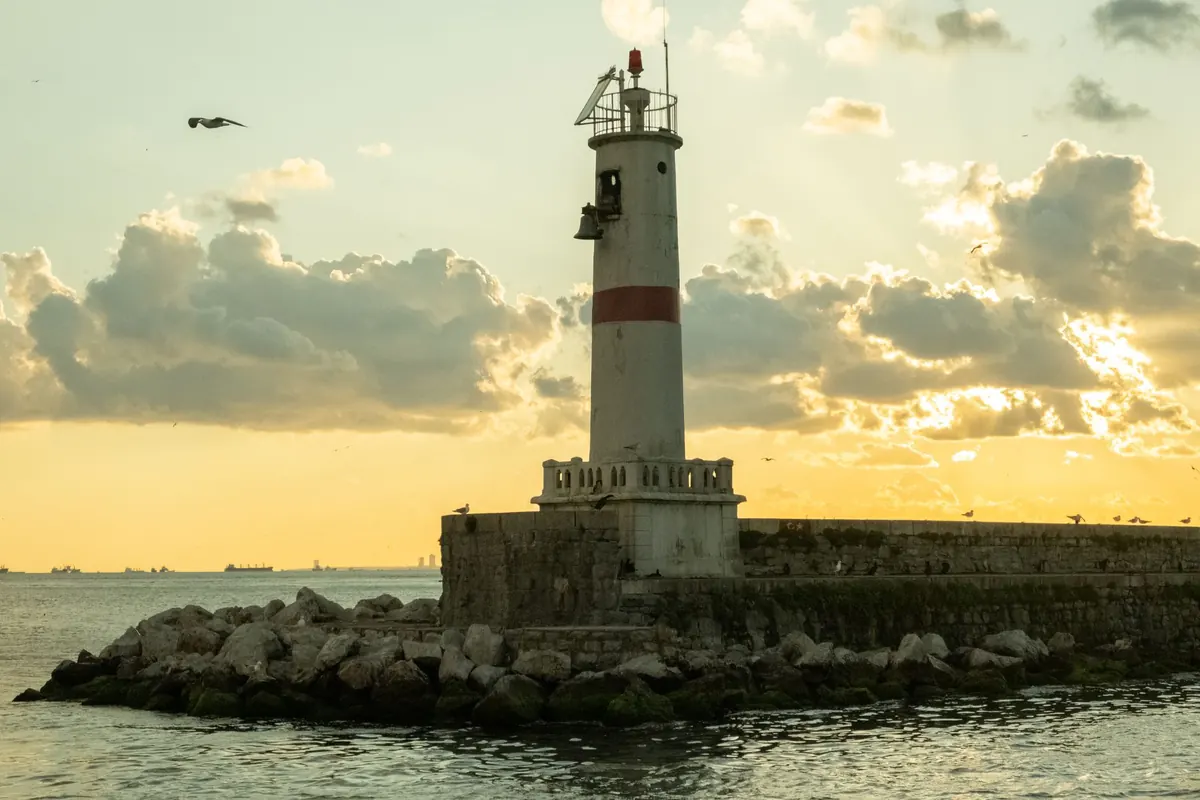
Lighthouses do more than flash warnings across dark water. They hold the memory of storms, near misses and ordinary people doing extraordinary things. The five stories below are attached to some of Britain’s best-known lights, from the Northumberland coast to the Outer Hebrides. Each one is worth knowing before you visit the place itself.
Longstone Lighthouse and the Forfarshire Rescue
On a September night in 1838, the steamship Forfarshire ran onto Big Harcar, a rocky outcrop in the Farne Islands. The weather was foul. From Longstone Lighthouse, keeper William Darling and his daughter Grace saw survivors clinging to the rocks. They launched a coble, rowed through heavy seas and brought nine people back. Grace became a national figure; her courage is still tied to this stretch of Northumberland coast.
Seeing the site today
Longstone is reachable by boat from Seahouses in season, weather permitting. The Farne Islands are a seabird sanctuary, so landings are controlled. Check sailing times and tide tables before you go; the crossing can be choppy even on a calm-looking day. The Grace Darling Museum in Bamburgh tells the story well and is a sensible first stop if the boats are cancelled.
Eddystone Lighthouse and the Great Storm
Eddystone reef, off Plymouth, has wrecked ships for centuries. The first lighthouse on the reef, designed by Henry Winstanley, was swept away in the Great Storm of 1703; Winstanley was there and died. A second wooden tower burned down in 1755. John Smeaton’s stone lighthouse, completed in 1759, used interlocking blocks and hydraulic lime, setting new standards for offshore building. The current tower is the fourth on the site.
What you can see
The current Eddystone is automated and not open to the public. Smeaton’s tower, however, was dismantled and rebuilt on Plymouth Hoe, where you can climb it. Boat trips from Plymouth Sound sometimes pass the reef; ask about sea conditions and whether the trip actually leaves the shelter of the Sound. The Hoe is a good place to start for views, museums and a sense of the approach to the reef.
Bell Rock Lighthouse and the North Sea
Bell Rock, or Inchcape, lies off the Angus coast. It is covered at high tide, which made building a lighthouse there an extraordinary gamble. Robert Stevenson’s tower was begun in 1807 and lit in 1811. Work could only happen at low tide, and the crew worked from a temporary barracks on the rock, with support boats standing by. Storms repeatedly damaged equipment. The result was a stone tower that has survived more than two centuries of North Sea weather.
Arbroath and the Signal Tower
The Signal Tower Museum in Arbroath occupies the shore station that once watched over the building work. It explains the logistics: the boats, the iron rails, the barracks on the rock. Boat trips to Bell Rock run from Arbroath in summer, but they are weather-dependent and do not land. If you are walking the Angus coast path, look for clear days when the tower appears as a thin pencil on the horizon.
Flannan Isles and the Missing Keepers
In December 1900, the relief vessel Hesperus arrived at Eilean Mòr in the Outer Hebrides. The lighthouse was empty. Keepers James Ducat, Thomas Marshall and Donald McArthur had vanished. The lamp was clean, the beds unmade, and no bodies were found. Investigators suggested a rogue wave or an accident on the cliffs; others reached for stranger explanations. The mystery has never been solved.
A remote place
The Flannan Isles are not a casual day out. There is no regular public landing, and the sea state can change quickly. Some wildlife and boat trips from Lewis pass nearby, but landing is usually prohibited or impossible. Treat the islands as a place to view from a safe distance. If you go out on the water, take proper waterproofs and listen to the skipper.
The Smalls Lighthouse and a Keeper’s Vigil
Off the Pembrokeshire coast, the Smalls Lighthouse was once manned by two keepers, Thomas Howell and Thomas Griffith. In 1801, after a period of tension between the two men, Griffith died. Howell, fearing he would be blamed if the body disappeared, kept it. He built a rough coffin and secured it outside the tower, where the wind and sea worked on it for weeks. When relief finally came, Howell was exonerated. The episode is often cited as the reason lighthouses moved to three-man crews.
Pembrokeshire viewpoints
The Smalls is automated and closed to visitors. You can see its light from parts of the Pembrokeshire coast on clear nights, and boat trips from Milford Haven or St Davids can pass offshore. The coast path around St Davids Head offers dramatic views, but the cliffs are exposed. Stay back from the edge, especially in wind, and check local access notices.
Visiting Lighthouse Sites: Practical Notes
Before you plan a trip, it helps to know what kind of lighthouse visit you are actually booking. Some towers are open for guided tours; many are not. Some are museums onshore; others are active offshore stations that you can only see from a boat. A little research saves a wasted journey.
- Check opening times and tour dates directly with the lighthouse or museum. Seasonal hours change.
- Look at tide tables and weather forecasts, not just the morning sky. Sea conditions can turn.
- Book boat trips in advance in summer, but accept that operators may cancel for safety.
- Wear grippy shoes for cliff paths and harbour walls. Take a waterproof and a warm layer.
- Use binoculars for offshore lights. They bring the tower close without putting you near the edge.
- Respect wildlife. Seabird colonies and seal haul-outs are easily disturbed.
- Tell someone your route if you are walking remote coastal sections, and carry a charged phone.
Lighthouse stories are best told on the coast, with salt in the air and the real building in view. Go for the light, the landscape and the history. The tales are the reason many of these places still pull us back.
Photo: Faruk Tokluoğlu / Pexels